Fluke TiX580, inside, chip by chip
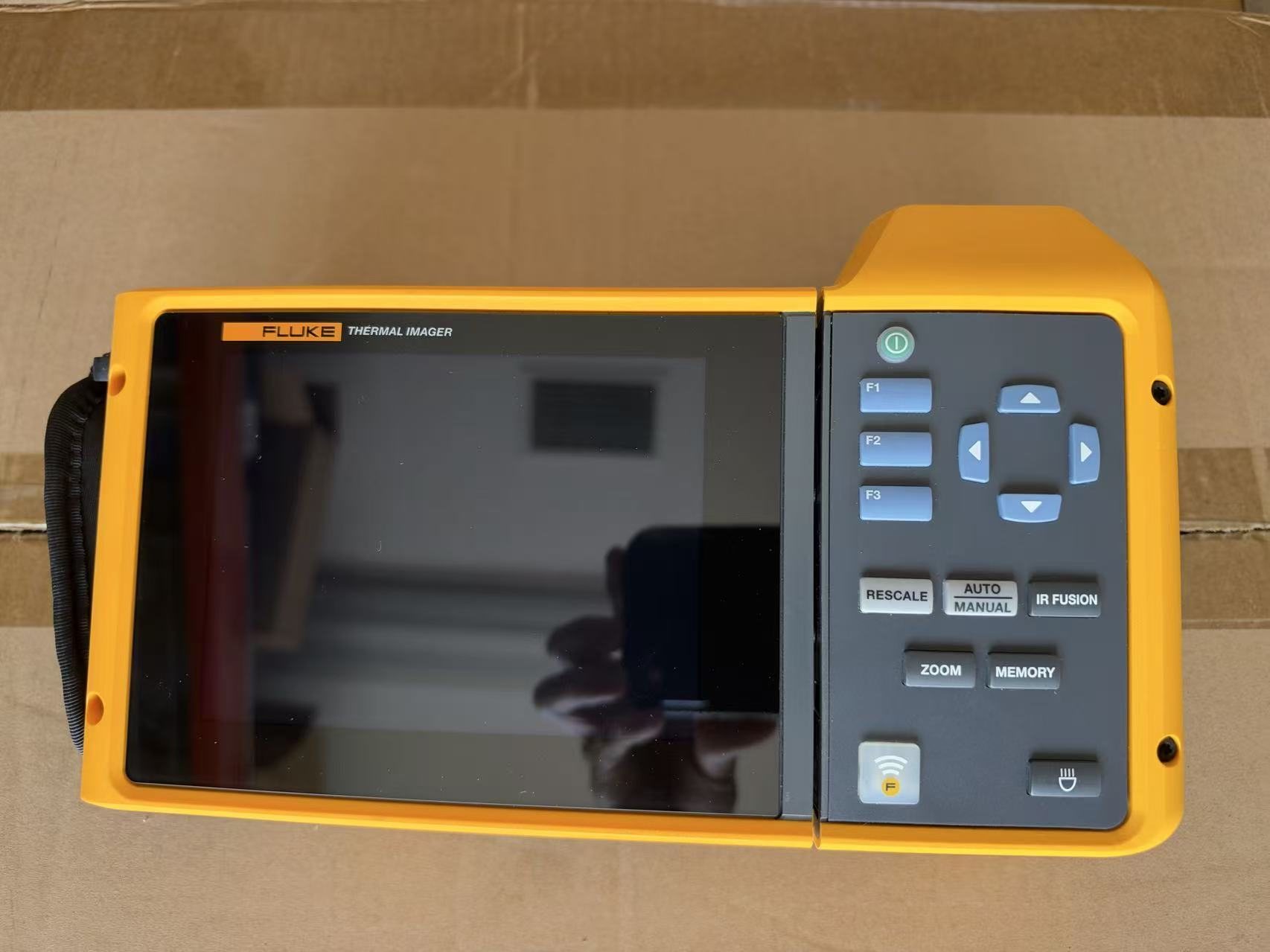
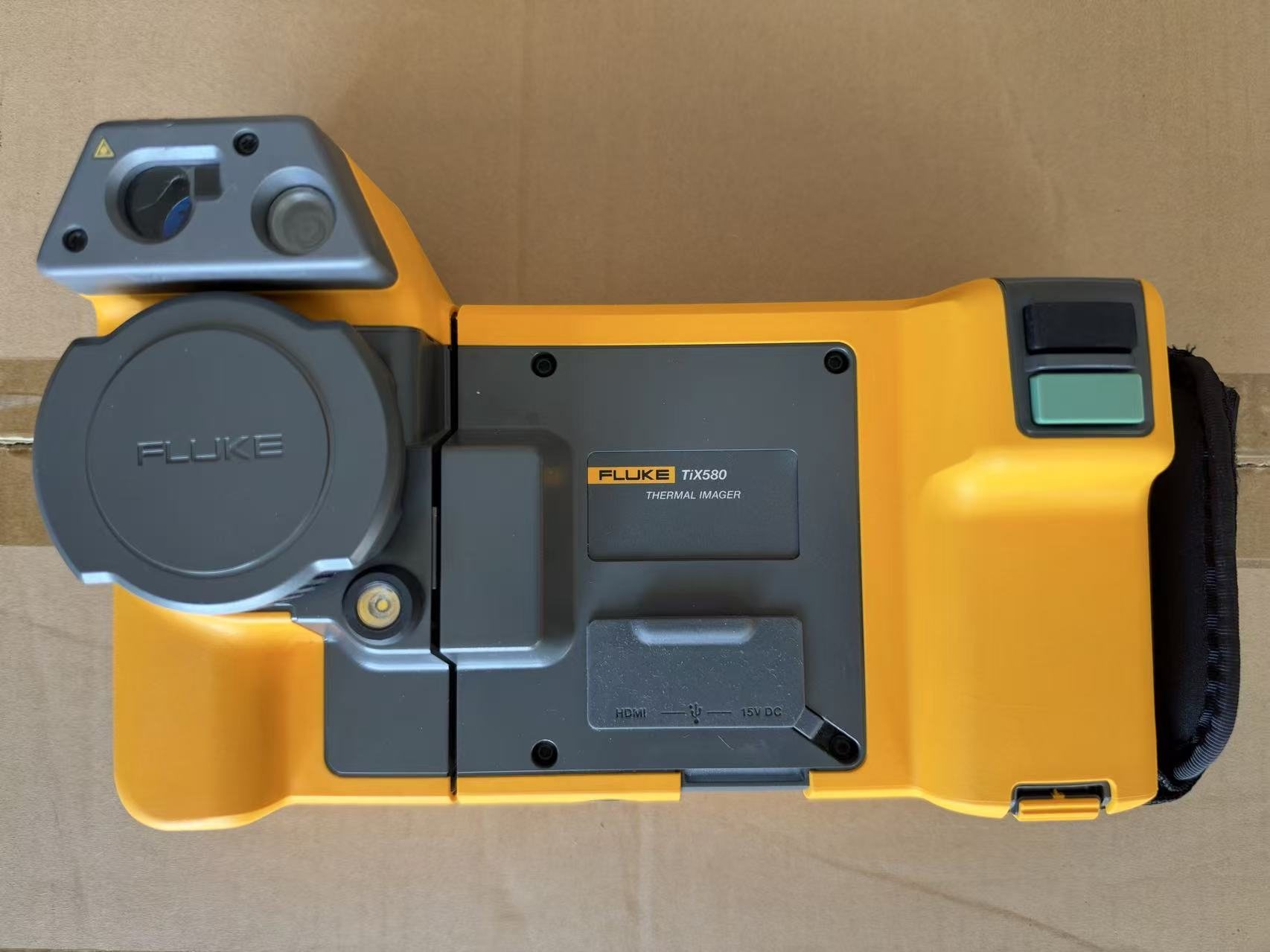
Fluke's TiX580 is a handheld thermal imager with a touch screen. Inside, an Altera FPGA turns the infrared engine's frames into pictures, and a Texas Instruments DM3730 running Linux 3.4.79 shows, stores and sends them. Ours is on the bench.
How a picture gets to the screen
- The infrared engine behind the lens, a 640 x 480 microbolometer with its own small processor, measures the scene and sends each frame down a 40-way cable to the main board.
- An Altera Cyclone IV FPGA takes the frames into its own memory, scales them and blends in the visible camera's picture for IR-Fusion.
- A Texas Instruments DM3730 reads the frames from the FPGA, turns raw counts into temperatures with the camera's calibration, and runs the touch interface.
- From there the picture goes to the 5.7-inch screen, out of the HDMI port, over USB to a PC, over Wi-Fi, or into a saved file.
The main board
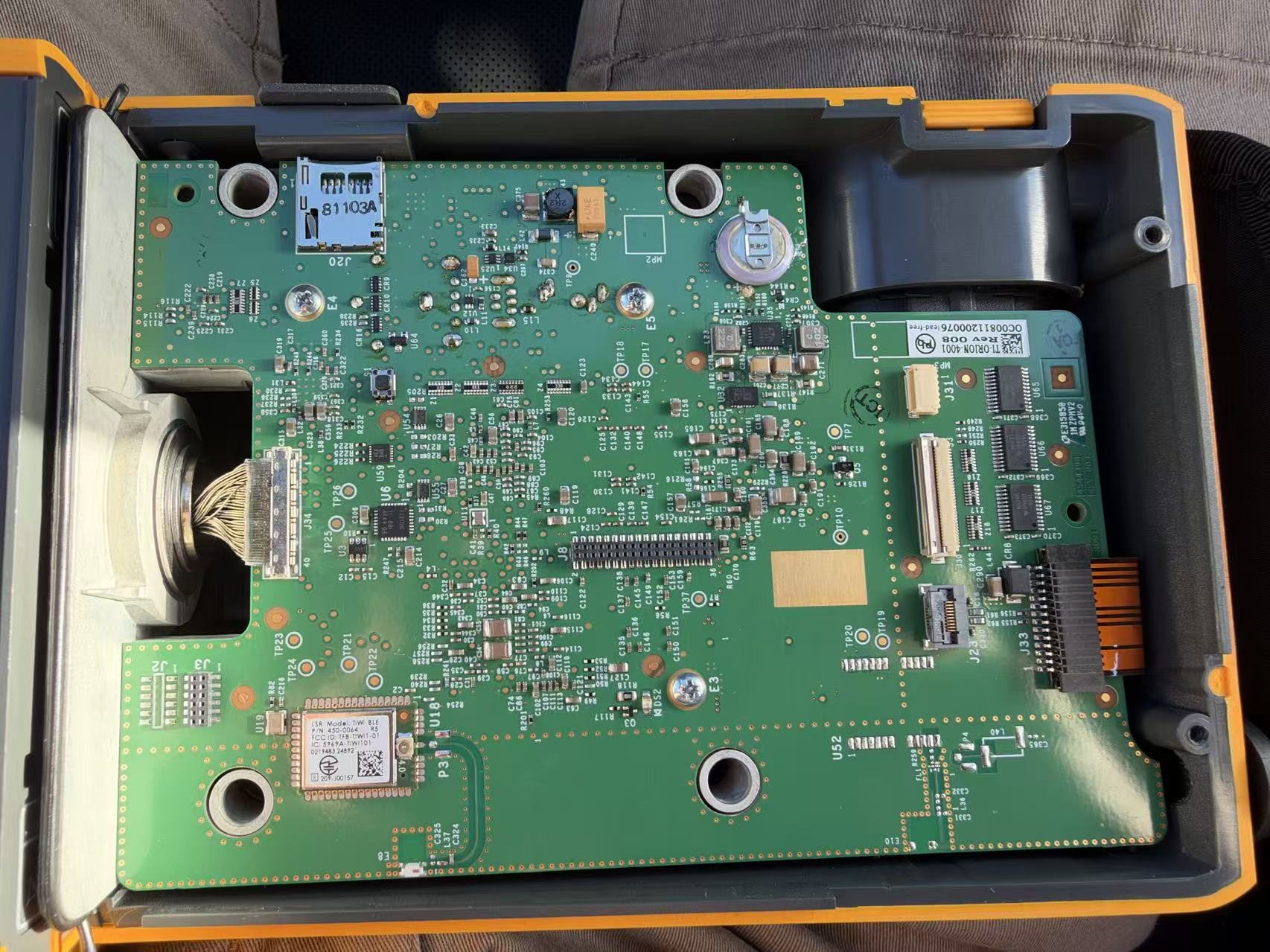
Fluke calls it TI-ORION-4001; ours is revision 008. The camera's software calls the board Orion and runs the same main board in the TiX520 and TiX560.
The core chips
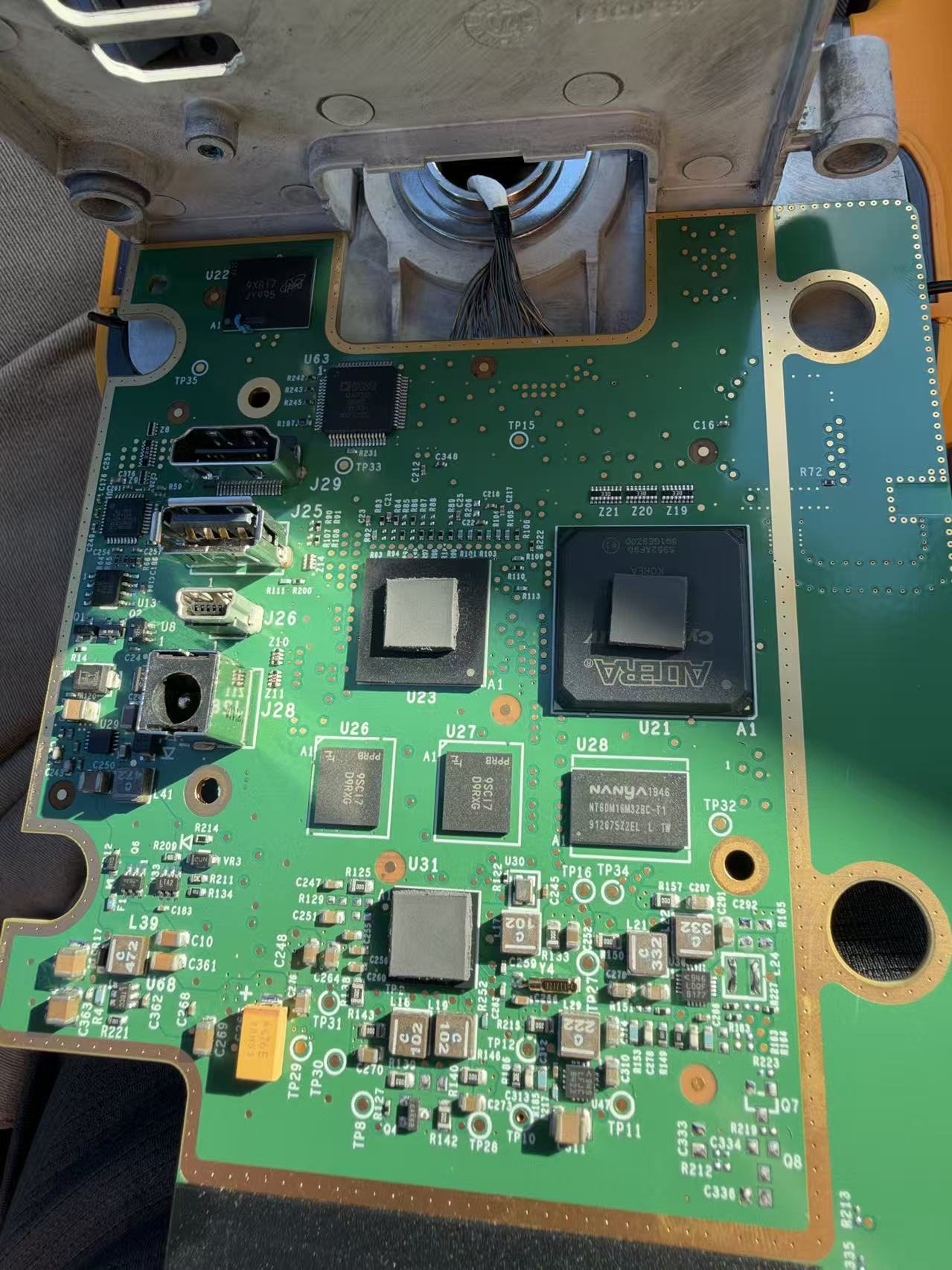
In the order a picture travels. The marking is what is printed on the chip on our board; identified means the marking or a filing names the part, probable that it fits everything we have read but the part number is not printed in full.
| Ref | Chip | Marking | Side | Known |
|---|---|---|---|---|
| U21 | Altera Cyclone IV FPGAThe video pipeline: takes the infrared engine's frames, scales them, blends in the visible camera (IR-Fusion) and hands every frame to the processor. | Altera Cyclone IV S952AF90 3G1GE920D KOREA | screen side | identified |
| U28 | Nanya DRAMThe FPGA's own frame memory. | NANYA 1946 NT6DM16M32BC-T1 912675Z2EL L TW | screen side | probable |
| U23 | Texas Instruments DM3730The processor: an ARM Cortex-A8 with a C64x+ DSP. Runs Linux, the touch interface, the radiometry and saving. | TI DM3730CUSA 9BZCF09 CUS 773 G1 | screen side | identified |
| U26 | Micron DRAMHalf of the processor's 32-bit memory. | MT 9SC17 D9RXG PPRB | screen side | not identified yet |
| U27 | Micron DRAMThe other half of the processor's memory. | MT 9SC17 D9RXG PPRB | screen side | not identified yet |
| U22 | Micron eMMCThe 4 GB internal storage: the software and saved images. | Micron 9XA17 JY995 5G1P | screen side | probable |
| U31 | Texas Instruments TPS65930Power management: the processor's supply rails, its clock and real-time clock, the keypad, the power key, the screen's backlight and audio. | TI TPS65930A2 99C92W $4 G1 | screen side | identified |
| U65 | TI SN74LVC8T245Level shifter: lifts eight of the screen's lines from the processor's 1.8 V to the panel's 3.3 V. | NH245 96K G4 A5VL | back-cover side | identified |
| U66 | TI SN74LVC8T245Level shifter, eight more lines. | NH245 96K G4 A5VL | back-cover side | identified |
| U67 | TI SN74LVC8T245Level shifter, the last eight lines. | NH245 96K G4 A5VL | back-cover side | identified |
| U63 | Analog Devices ADV7513HDMI output: turns the processor's video into the HDMI port's signal. | ANALOG DEVICES ADV7513 BSWZ #1719 3827255.1 | screen side | identified |
| U6 | TI TUSB1210USB 2.0 transceiver for the processor's USB port. | T1210B AFX4 G4 88I | back-cover side | identified |
| U14 | Microchip (SMSC) USB2512BUSB hub: the accessory (type-A) port hangs off it. | SMSC USB2512B D1947-A2P10 9474JEA ASE-TW | screen side | identified |
| U18 | LSR TiWi-BLE module (TI WL1271L)Wi-Fi and Bluetooth: Wi-Fi to a phone or PC; Bluetooth for the headset that records voice notes onto images. | LSR Model: TiWi-BLE P/N: 450-0064 R5 FCC ID: TFB-TIWI1-01 IC: 5969A-TIWI101 0219483 24892 | back-cover side | identified |
| E8 | Johanson 2450AT18D0100The 2.4 GHz chip antenna: one antenna, shared by Wi-Fi, Bluetooth and the meter radio, switched by the FPGA. | — | back-cover side | identified |
| U35 | Analog Devices (Linear) LTC3633Two 3 A step-down regulators: main supply rails. | LT 9K 3633 83482 | back-cover side | identified |
| U32 | Analog Devices (Linear) LT30221 A low-dropout regulator: a quiet low-voltage rail. | 3022 B42540 LT 945 | back-cover side | identified |
Not identified yet
These chips carry only short codes. If you know one, write to us.
| Ref | Marking | Side |
|---|---|---|
| U29 | LLTP 83GG 925 | screen side |
| U33 | LTA2 | screen side |
| U13 | 8B76 3526 M-H | screen side |
| U8 | 2Z14L | screen side |
| U36 | <946 LDQF B177 | screen side |
| U47 | <946 LDQF | screen side |
| U3 | AVV | back-cover side |
| U59 | AEX BAB | back-cover side |
| U54 | FEN Z | back-cover side |
| U55 | FEN Z | back-cover side |
What it runs
| Processor | Texas Instruments DM3730 (DM3730CUSA on our board): an ARM Cortex-A8 with a C64x+ DSP beside it |
| Stock software | Linux 3.4.79 |
| Kernel support | Linux 3.4 left kernel.org's long-term support in 2016 |
| Main board | TI-ORION-4001, revision 008 on our unit |
| Ports | HDMI, USB and 15 V DC, as marked on the case |
The schematic, drawn from the board and the firmware: TI-ORION-4001 schematic (PDF).